 跳到内容
跳到内容 
Table of Contents
Heaven and Earth have Yin and Yang — and so does the human body. In traditional Chinese philosophy, the I Ching (Book of Changes) and the Tao Te Ching (Classic of the Way and Virtue) stand as two towering pillars that reveal the cosmic law of Yin–Yang balance. This profound principle extends deeply into the realm of human health, offering timeless guidance for achieving harmony in body and mind.
The Yin–Yang Principle in the I Ching
The I Ching opens with the phrase: “One Yin, one Yang — that is the Way.” It defines the alternation and interaction of Yin and Yang as the fundamental rhythm of all creation. Within the human body — the microcosm of Heaven and Earth — the movement of Yin and Yang energies sustains life itself.
Qi (vital energy) belongs to Yang; blood to Yin. Function represents Yang; substance represents Yin. Excitement is Yang; inhibition is Yin.
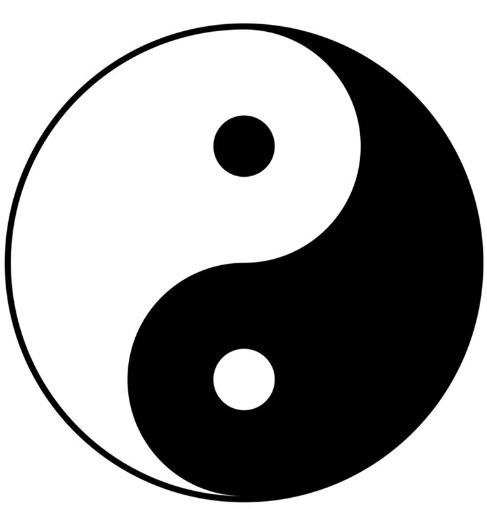
The Taiji Diagram from the I Ching vividly depicts the relationship between Yin and Yang — each containing the seed of the other, eternally transforming in mutual dependence. The body’s Yang energy must be nourished by Yin fluids, while Yin essence relies on Yang energy to circulate and protect. When Yin and Yang are in balance, the body attains the ideal state described as “Yin in peace, Yang in restraint, spirit in harmony.” But when this balance breaks — “Yin and Yang separate, essence and Qi collapse” — illness inevitably arises.
The Wisdom of Softness and Harmony in the Tao Te Ching
Laozi, in the Tao Te Ching, delves even deeper into the subtle art of maintaining harmony: “All things carry Yin and embrace Yang; their blending brings harmony.” The human body mirrors the universe, and true longevity depends on the dynamic equilibrium of Yin and Yang within the emptiness of the breath.
Laozi teaches: “To know the constant is enlightenment; to act without knowing the constant brings disaster.” This reminds us that when lifestyle habits violate the natural balance of Yin and Yang, physical and mental disharmony follows. His advice to “attain utmost emptiness, maintain steadfast stillness” encourages us to return to an inner state of calm and simplicity — allowing the body’s Yin and Yang energies to self-regulate and restore their natural rhythm.
How to Cultivate Yin–Yang Balance in Daily Life
Follow Nature’s Rhythm
The I Ching emphasizes “acting in accord with the times.” Human life should align with the rise and fall of Yin and Yang in nature. Work at sunrise to follow the growth of Yang energy; rest at sunset to harmonize with the quietude of Yin.
In spring and summer, nourish Yang with activity and lightness; in autumn and winter, cultivate Yin with rest and reflection. Living “in harmony with Heaven and in step with the seasons” is the foundation of physical balance.
Maintain Dietary Harmony
The Tao Te Ching warns that “too many flavors dull the palate.” Diet should neither indulge in excess nor neglect variety. Foods have four natures — cold, cool, warm, and hot — and five flavors — sour, bitter, sweet, pungent, and salty — each resonating with Yin or Yang qualities.
Those with excessive internal heat should choose Yin-nourishing, cooling foods; those with cold constitutions should prefer warm, Yang-supporting ingredients. The essence lies in moderation — achieving harmony so that Yin and Yang nourish one another from within.
Balance Movement and Stillness
The I Ching says, “There is a time for motion and a time for rest.” The Tao Te Ching values “profound stillness.” Excessive movement depletes Yin; prolonged inactivity weakens Yang.
Traditional practices such as Tai Chi and Baduanjin embody this principle — through external motion and internal stillness, body and spirit unite, fostering Yin–Yang balance. At the same time, maintaining emotional serenity — as Laozi said, “Purity and calm bring order to all under Heaven” — protects internal harmony from the disturbances of stress and desire.

Know Contentment and Avoid Excess
The Tao Te Ching cautions: “The five colors blind the eyes; the five sounds deafen the ears.” Overstimulation and indulgence disrupt Yin–Yang balance. The modern phenomenon of “internal heat” — irritability, insomnia, or inflammation — often arises from excessive Yang consuming Yin.
True wisdom lies in moderation: rest when tired, avoid late nights, and restrain unnecessary desire. This is the embodiment of Laozi’s teaching — “To know the constant is clarity.”
Conclusion: The Middle Way of Life
Viewed together, the I Ching and Tao Te Ching point toward a single truth — the philosophy of balance.
The I Ching reveals the dynamic law of Yin–Yang transformation in the visible world, while the Tao Te Ching illuminates the inner path of returning to natural harmony. The human body, as a living unity of Yin and Yang, thrives not through resistance against nature, but through cooperation with its rhythms — seeking balance amid motion, and stillness amid change.
When we reflect upon ourselves through the lens of these ancient classics, we realize that true health is not merely the absence of disease, but the restoration of harmony between body, mind, and the cosmos.
In this flowing balance of Yin and Yang, we rediscover the ultimate union between humanity and the Way — a state of profound wholeness where life itself aligns with the great harmony of the universe.